


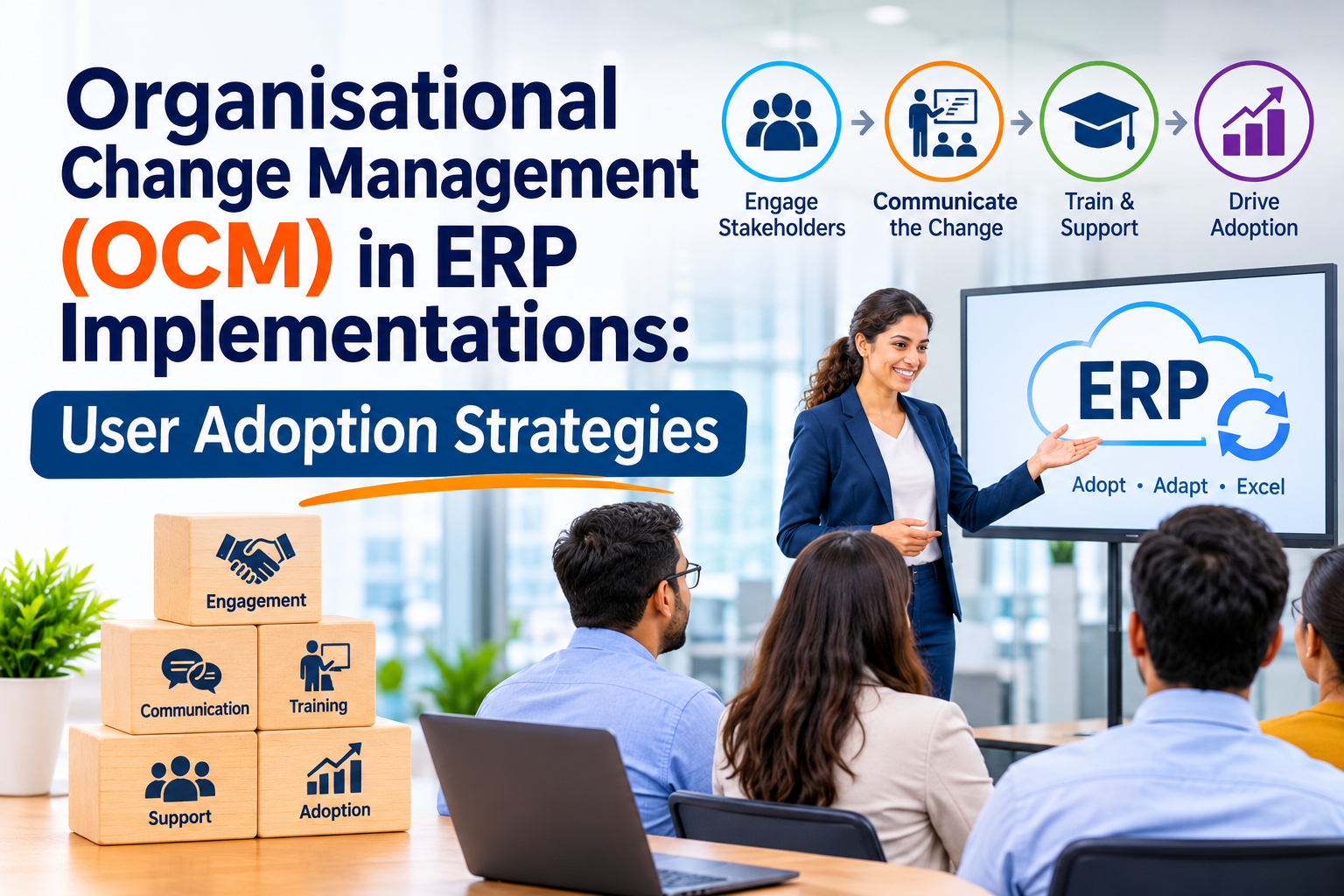
Implementing an Enterprise Resource Planning (ERP) system is a major business transformation. It changes how employees manage finance, procurement, inventory, production, human resources and daily operations. While organisations invest significant resources in ERP platforms, successful implementation depends on more than software configuration and technical deployment. Employees must understand, accept and consistently use the new system.
This is where Organisational Change Management (OCM) becomes essential. A structured OCM strategy prepares employees for new workflows, reduces resistance and helps businesses achieve the expected value from their ERP investments.
Why Organisational Change Management Matters in ERP Implementations
ERP implementations often introduce significant changes to established business processes. Employees who have used spreadsheets, departmental applications or legacy systems for years may find it difficult to adapt to a centralised platform.
Without proper change management, organisations may experience low system adoption, inconsistent data entry, process delays and continued dependence on manual workarounds.
OCM addresses these challenges by preparing people alongside the technology rollout.
Key benefits include:
-
Higher User Adoption: Employees understand how and why to use the new ERP system.
-
Reduced Resistance: Early communication and employee involvement address concerns before they become major obstacles.
-
Improved Productivity: Standardised workflows help departments work more efficiently.
-
Better Data Quality: Consistent system usage improves the accuracy of operational information.
-
Stronger ERP ROI: Businesses can realise more value when employees actively use the implemented features.
For organisations planning an ERP upgrade or restructuring their existing systems, ERP Revamp and Transformation Consulting can help align technology improvements with operational requirements.
Common ERP User Adoption Challenges
Even a technically successful ERP implementation can struggle when employees are not prepared for the transition. Understanding common adoption barriers helps organisations develop practical solutions.
Resistance to New Processes
Employees may prefer familiar methods and feel uncertain about changing established responsibilities. Some may view the ERP system as additional work rather than an improvement.
Insufficient Training
Generic training sessions may not address the actual responsibilities of finance teams, warehouse operators, procurement managers or production employees. Users need practical guidance based on their daily activities.
Poor Communication
When management does not explain the purpose of implementation, employees may misunderstand the changes or become concerned about their roles and responsibilities.
Complex System Workflows
Excessive customisation, unclear approval processes and complicated navigation can make the system difficult to use.
Lack of Management Support
If department heads and senior leaders continue using old processes, employees may receive mixed signals about whether the new ERP system is mandatory.
Identifying these challenges early allows project teams to address adoption risks before and after go-live.
Effective OCM Strategies to Improve ERP User Adoption
A successful change management programme should be integrated into the ERP implementation roadmap rather than treated as a separate activity after deployment.
A. Establish Clear Leadership and Stakeholder Alignment
Senior management must communicate why the organisation is implementing the ERP system, what business improvements are expected and how different departments will be affected.
Department heads should participate in planning, communicate changes to their teams and reinforce the agreed processes.
B. Involve Employees During the Planning Stage
Employees who understand existing operational challenges can provide valuable input during ERP design and process mapping.
Involve representatives from finance, HR, procurement, inventory, sales and operations in requirement discussions, workflow reviews and user acceptance testing.
This helps identify practical issues before the system reaches production.
C. Develop Role-Based ERP Training
Training should reflect how different employees interact with the system.
For example:
-
Finance teams need training on accounting, reporting and financial approvals.
-
Procurement teams need guidance on purchase orders, vendor records and approval workflows.
-
Warehouse teams need practical instruction on inventory transactions and stock movements.
-
Managers need training on dashboards, performance reports and decision-making tools.
Use hands-on exercises, demonstrations, reference guides and practice environments to build confidence.
D. Create Department-Level Change Champions
Identify employees who can act as change champions within their departments. These individuals help communicate updates, answer routine questions and identify adoption issues.
Change champions also provide project teams with direct feedback from employees who use the system daily.
E. Communicate Changes Consistently
A structured communication plan should explain what is changing, when it will happen and how employees will be affected.
Use team meetings, internal announcements, training sessions and progress updates to maintain transparency throughout the implementation.
Integrating Change Management into the ERP Implementation Lifecycle
OCM should begin before configuration and continue well beyond the go-live date.
Phase 1: Assessment and Change Readiness
Identify affected departments, existing process gaps, stakeholder expectations and potential resistance. Establish adoption objectives and assess employee readiness.
Phase 2: Process Design and Employee Engagement
Map current and future workflows. Involve department representatives in process discussions and ensure the proposed ERP configuration supports actual business requirements.
Phase 3: Training and Testing
Conduct role-based training and involve end users in User Acceptance Testing (UAT). Testing should evaluate both system functionality and employees' ability to complete important business activities.
Phase 4: Go-Live Preparation
Confirm training completion, user access, support responsibilities and communication schedules. Prepare employees for the transition from legacy processes to the new ERP environment.
Phase 5: Post-Implementation Support
Provide additional training, resolve user concerns and monitor adoption. Collect feedback to identify workflows that require improvement.
This approach connects the people, processes and technology involved in digital transformation programmes.
Measuring ERP User Adoption and Change Management Success
ERP implementation success should not be measured only by whether the system goes live on schedule. Businesses must also evaluate whether employees are using it effectively.
Useful ERP adoption KPIs include:
-
Active User Rate: Percentage of intended employees actively using the ERP system.
-
Training Completion: Percentage of employees who complete required training.
-
Task Completion Accuracy: Accuracy with which users perform critical ERP activities.
-
Process Compliance: Percentage of transactions completed through approved ERP workflows.
-
Support Ticket Trends: Frequency and nature of user issues after deployment.
-
User Feedback: Employee confidence, satisfaction and reported difficulties.
-
Legacy System Dependency: Continued use of spreadsheets or previous applications for processes that should be handled within the ERP.
Compare these indicators across departments and implementation phases. A department with frequent support requests may need additional training, while low transaction activity may indicate process or access-related barriers.
The objective is not simply to increase logins but to ensure employees complete their responsibilities accurately through the new system.
Sustaining ERP Adoption After Go-Live
The go-live milestone marks the beginning of regular system usage, not the end of change management.
Organisations should maintain ongoing support through refresher training, updated documentation, department-level feedback sessions and periodic workflow reviews.
Management should also reinforce the new operating procedures through clear responsibilities and consistent process governance.
When businesses expand, introduce new ERP modules or modify existing workflows, change management activities should be updated accordingly.
Granuler supports organisations through ERP strategy, system optimisation and transformation planning, helping businesses connect technology decisions with operational priorities. Its Virtual CIO and strategic IT consulting approach provides leadership and programme oversight to help align technology initiatives with wider business goals.
Conclusion
Successful ERP implementation requires more than selecting the right platform and completing technical deployment. Employees must be prepared to adopt new processes, understand their responsibilities and use the system consistently.
A structured Organisational Change Management strategy brings leadership alignment, employee engagement, role-based training and post-go-live support into one coordinated approach.
By treating user adoption as a core implementation objective, businesses can reduce disruption, improve operational consistency and realise greater value from their ERP investments.
Planning an ERP transformation or struggling with user adoption?
Granuler helps businesses align ERP strategy, technology implementation and organisational readiness with measurable business objectives. Connect with Granuler to discuss your ERP transformation requirements.
Frequently Asked Questions
1. What is Organisational Change Management (OCM) in ERP implementation?
OCM is a structured approach to preparing and supporting employees through changes introduced by an ERP system. It includes stakeholder engagement, communication, training, resistance management and ongoing adoption support.
2. Why is change management important for ERP implementation?
Change management helps employees understand new processes, reduces resistance and improves system adoption. It also supports data accuracy, process consistency and the realisation of ERP investment benefits.
3. How can businesses improve ERP user adoption?
Businesses can improve ERP adoption through early employee involvement, leadership support, role-based training, change champions, clear communication and continuous post-implementation assistance.
4. When should OCM begin during an ERP project?
OCM should begin during the initial ERP planning and assessment stage. Starting early allows organisations to identify affected stakeholders, understand resistance and prepare employees before new workflows are introduced.
5. How is ERP user adoption measured?
ERP adoption can be measured through active user rates, training completion, task accuracy, process compliance, support requests, employee feedback and continued dependence on legacy systems.
6. What is the role of leadership in ERP change management?
Leadership communicates the purpose of the transformation, establishes expectations, supports department managers and reinforces the adoption of new business processes throughout implementation.
7. Does change management continue after ERP go-live?
Yes. Post-go-live change management includes refresher training, user feedback, technical and functional support, workflow improvements and regular adoption monitoring to ensure long-term system usage.